

Dual Biological/Chemical Waste - Liquid
Biological liquids with cell culture and microbial culture media additives cannot be disinfected through autoclaving or bleach treatment if contaminated with the following:
- Heavy metals
- Toxins
- Stains (Ethidium bromide, trypan blue, Coomassie blue)
- Methotrexate
- Nanomaterials
- B-mercapatoethanol
- Hormones
- Pharmaceutical drugs
- Chemotherapy agents
- Any additional materials that may be considered a potential chemical, biological, or environmental hazard. These additives are usually incorporated into the media after the organism’s growth as part of an experiment to affect metabolism, measure byproducts, or cellular activity.
The disposal method for these media plus additives must be discussed and approved by the EHS Hazardous Waste and Biological Safety Groups. Every effort will be made to disinfect the biological component while avoiding chemical incompatibility. If this is not achievable, then EHS Waste Staff will accept it as a dual waste.
Container Type:
When reusing empty containers, they must be compatible with the type of chemical waste stored in them. Empty reagent bottles can be used for chemical waste collection after following the Empty Bottle guidance in the Waste Section of the EHS website.
Although EHS does not maintain a list of compatible materials, in general chromatography absorbents can be stored in glass and plastic containers with a lid. Container compatibility information is also available on Safety Data Sheets. EHS provides 5-gallon high density polyethylene (HDPE) carboys for liquid hazardous waste storage.
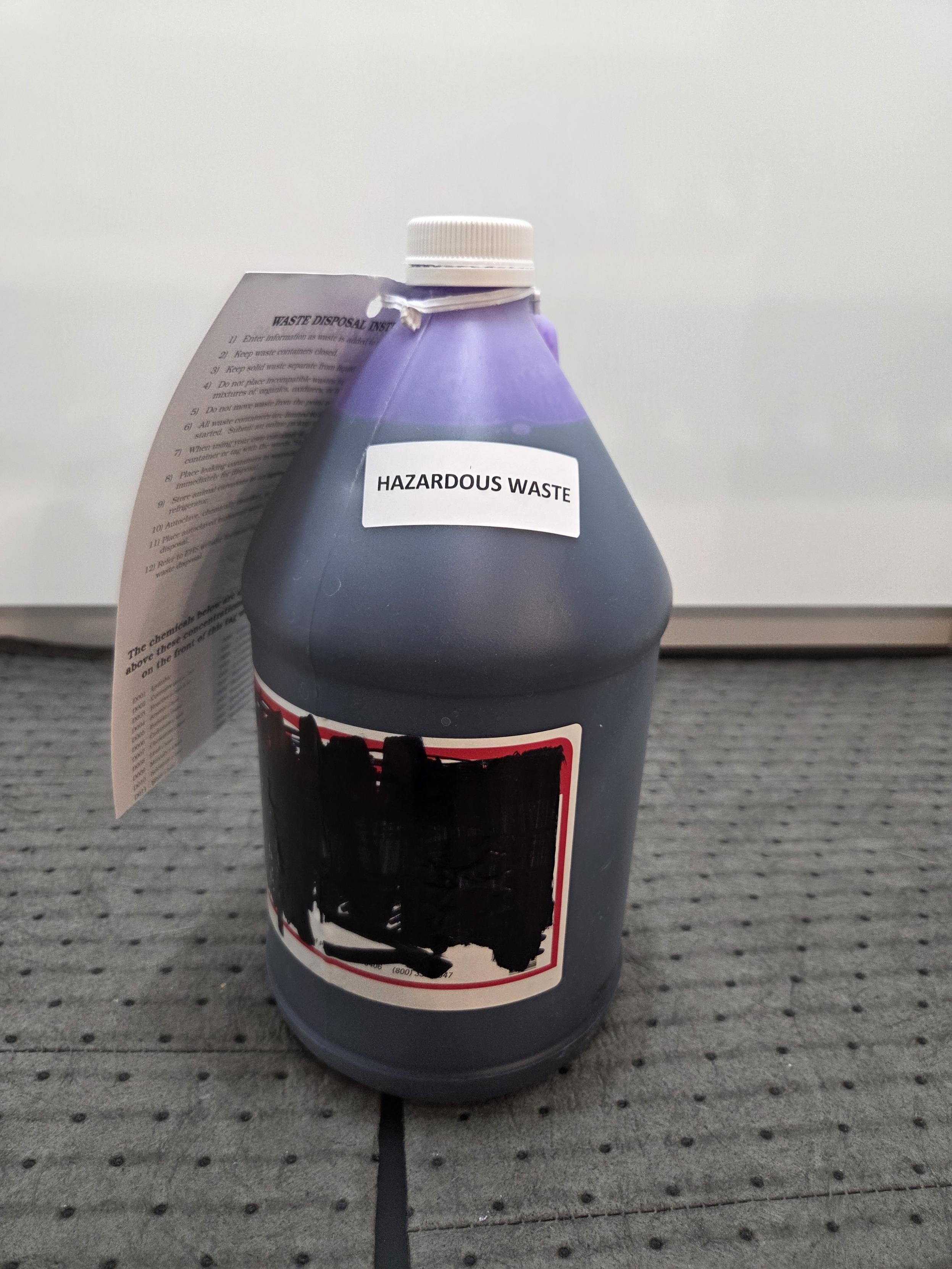
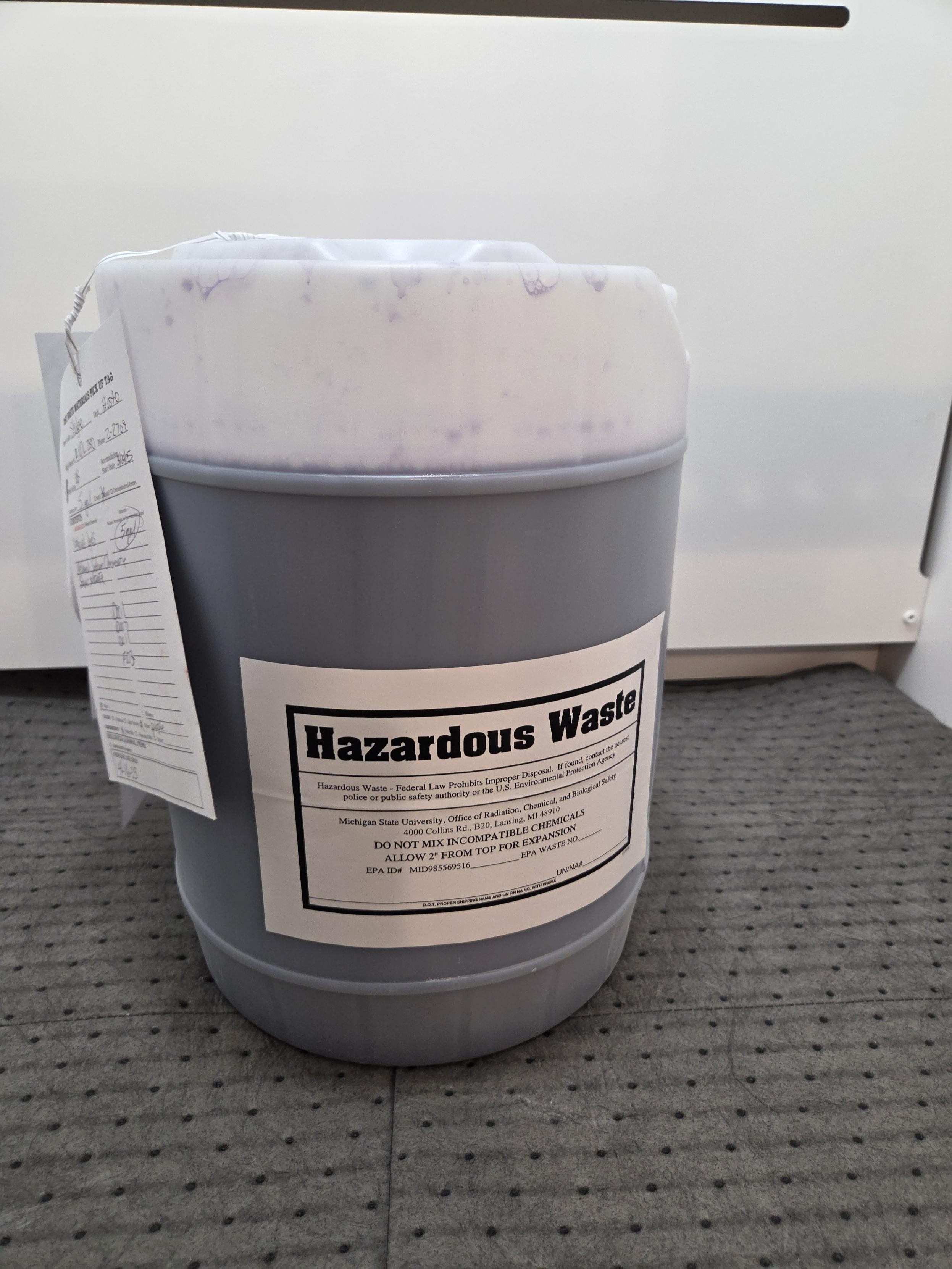
Red medical waste sharps containers must not be used for liquid dual waste.
Storage:
Waste containers must be kept free of any liquids or residue on their exteriors. EHS Hazardous Waste Staff will reject any container with liquid or residue on the exterior until it has been cleaned. Leaking waste containers will not be accepted, and the contents must be transferred to a new container prior to disposal by the EHS Hazardous Waste group.
- All container lids MUST be closed tightly unless waste is being actively added to the container.
- Do not overfill containers.
- Secondary containment is not required but is recommended for waste storage.
- Do not accumulate more than 55-gallons total of hazardous waste in your location. This limit applies to the sum of full containers and partial containers being filled.
- Submit frequent requests for waste pick up through the EHS Hazardous Waste Request form to stay within the 90-Day storage limit and minimize the amount of waste containers in your space.
- Do not move hazardous waste from the location that it was generated.
MSU Waste Tag Required:
Yes - A MSU Waste Tag is required for all dual liquid waste.
MSU Waste Tags must be directly affixed to the waste container either with string, a twist tie, chain and clipboard, rubber band, or tape. MSU Waste Tags are provided by EHS and can be requested through an EHS Hazardous Waste Request.
Labeling:
A MSU Waste Tag should be filled out and completed when the first drop of waste is added to the container, or when the material becomes unwanted. The date the first drop or piece of waste is added to the container starts the 90-Day accumulation limit.
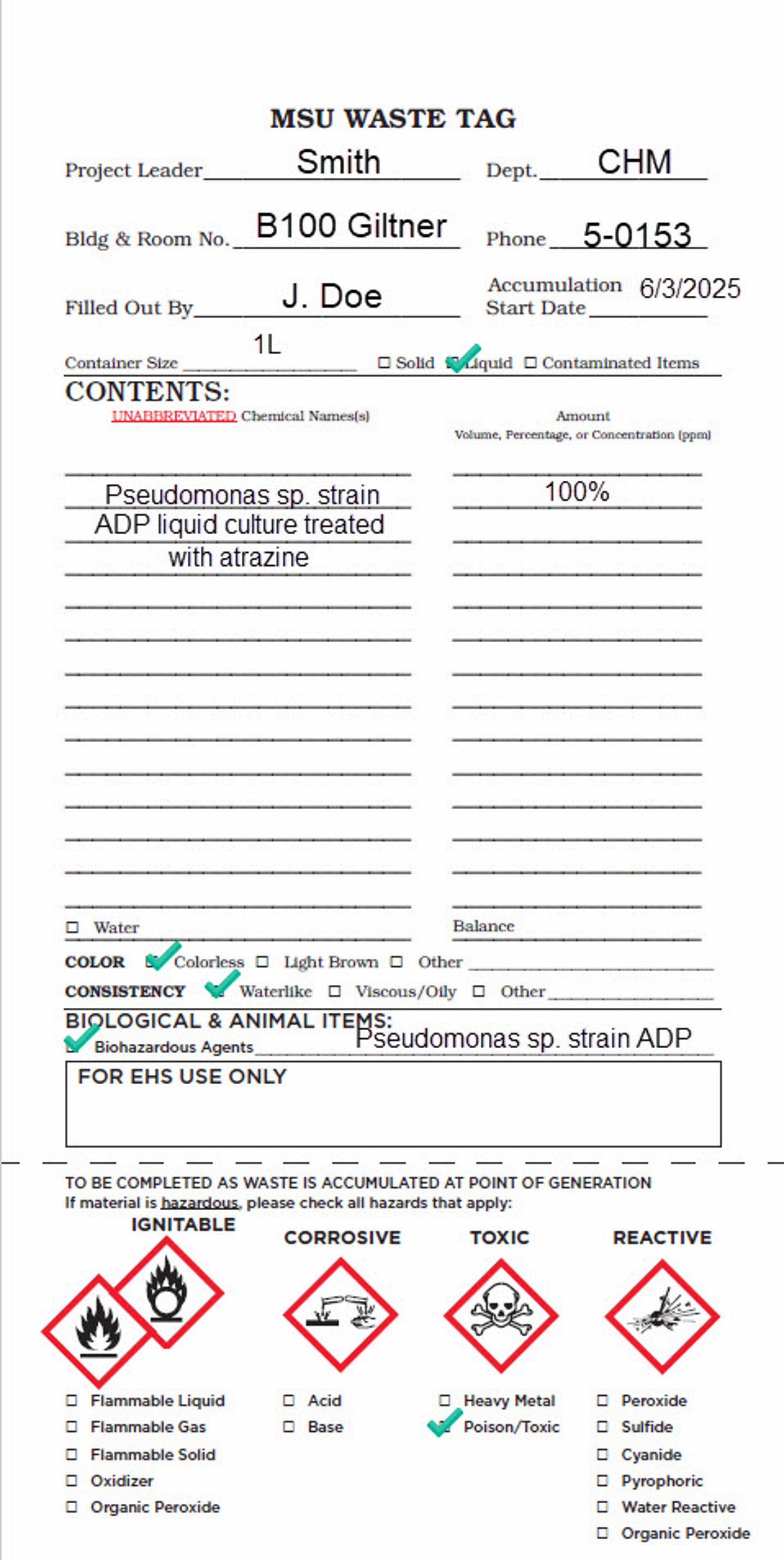
The contact information at the top of the MSU Waste Tag must be filled out to identify where the hazardous waste was generated, the container size and type, and who to contact with questions regarding the waste container.
All chemical and biological constituents must be accounted for on the MSU Waste Tag. Chemical names must be printed legibly, in English, and with no abbreviations. The amount of chemical constituents can be captured by either using percentages up to 100%, or by units of volume. Either way, these need to match the amount of waste in the container when EHS arrives to pick up the material. Inaccuracies and discrepancies on the MSU Waste Tag can result in the waste being rejected by the EHS Hazardous Waste Staff for safety and compliance reasons. For aqueous solutions, the check box for “Water Balance” can be used to account for the remaining percentages or volume. Chemical constituents must be identified on the MSU Waste Tag as they are added to the container, as guessing the contents of a full container creates safety and compliance violations. The biohazardous components must also be noted near the bottom of the tag.
Review and check all applicable potential hazards at the bottom of the MSU Waste Tag each time when adding waste to the container. The color and consistency section can be completed when the container is full, or when approaching the 90-Day storage limit.
Example of properly filled out MSU Waste tags for Dual Liquid Waste: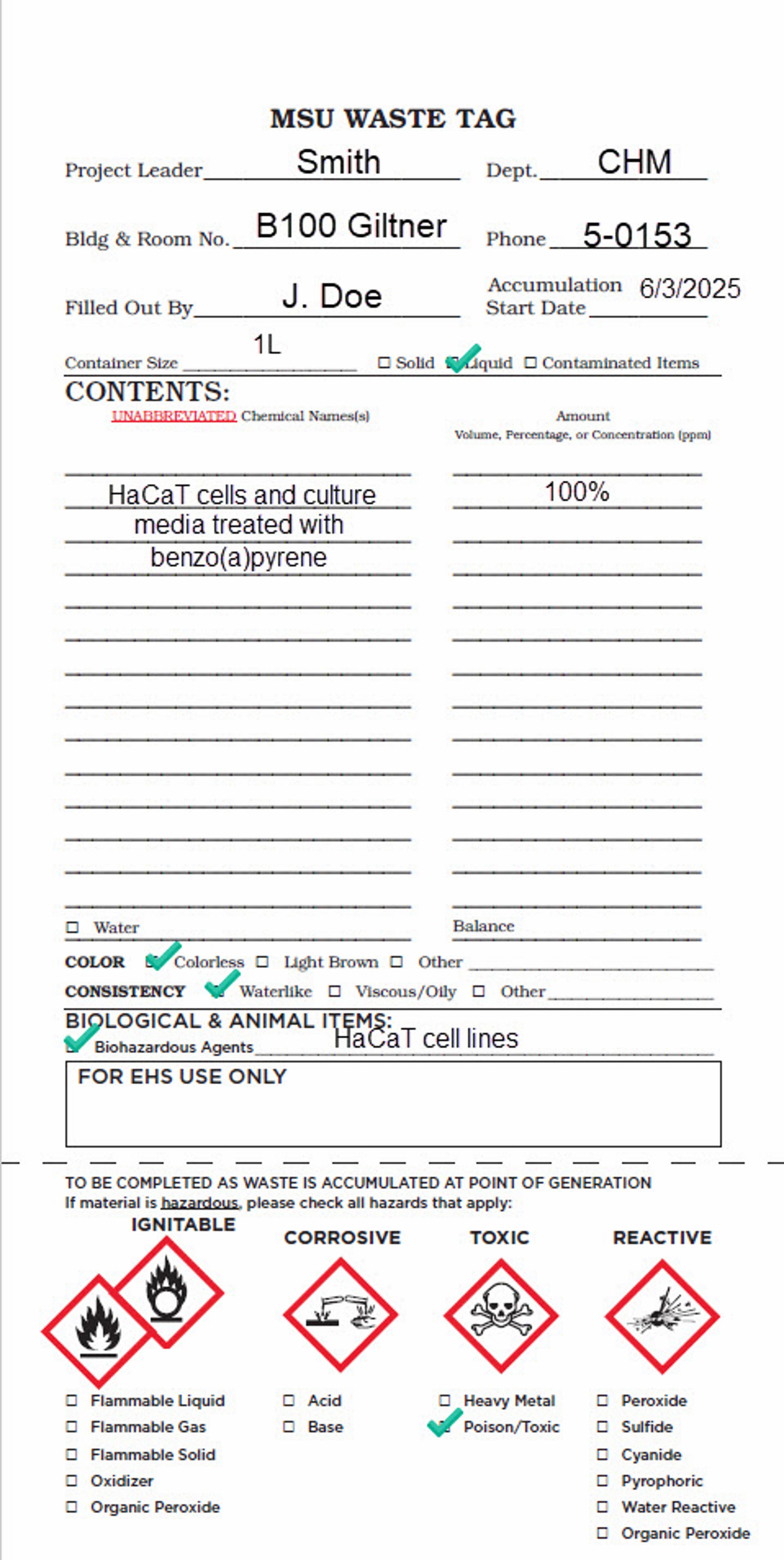
Submit Hazardous Waste Request
When the container is full or close to the 90-day accumulation limit, submit a Hazardous Waste Request via the EHS Safety Portal as follows:
- EHS Website: ehs.msu.edu
- Login in the Safety Portal through a preferred web browser using your MSU Net ID and EBS Password
- Select: Hazardous Waste Request
- Dual Waste – Biological Liquid is found under the Common Process category